Puch Maxi (1969-1995)
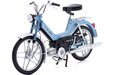
The Puch Maxi is not just a moped, it is a true classic and shaped an entire generation. Launched in the late 1960s by the legendary Austrian manufacturer Puch, it set new standards with its stamped steel frame and integrated fuel tank, creating a clean, lightweight, and highly functional design. Over nearly three decades, the Maxi earned a reputation for being practically indestructible, becoming both a reliable everyday companion and a favorite among tuning and custom fans.
Its recipe for success: less is more. While other models relied on heavy frames or elaborate fairings, the Puch Maxi focused on a compact layout and a simple two-stroke engine that anyone could maintain with basic tools. This accessibility, combined with outstanding agility in traffic, makes the Maxi one of the most sought-after and respected mopeds in the vintage scene today. A key factor in its commercial success was the 1973 oil crisis, which increased demand for fuel-efficient vehicles; the Maxi’s consumption of around 2 l/100 km made it the perfect solution for many riders.
Engine & transmission of the 2-stroke classic
- Engine: Single-cylinder 2-stroke engine, air-cooled
- Displacement: 48.8 cc
- Carburetor: 12mm Bing
- Power: between 1.0 hp and 2.0 hp, with intermediate versions of 1.5 hp (depending on country and version regulations). These outputs corresponded to a top speed of 32 km/h, 40 km/h and 48 km/h respectively.
- Start: Peadl start (motorized bicycle system) on the original models or kickstarter on later versions and some special variants.
- Transmission: Single-speed automatic with centrifugal clutch (E50 engine, recognizable by the round cover) or 2-speed automatic with double centrifugal clutch (ZA50 engine, recognizable by the rectangular cover). For special markets such as Switzerland, there was also a variant with a 2-speed manual gearbox (Z50 engine).
- Electrics: Bosch magneto ignition on older models; 12-volt system with CDI ignition on later versions.
The Maxi’s engine is legendary for its reliability. As the engine is naturally air-cooled (no forced ventilation), the design is minimalist and minimizes the risk of failure. The response is smooth and progressive, ideal for comfortable urban riding. The simple mechanics are easy to maintain; even after years of use, a well-maintained Maxi can often be started in just a few simple steps.
Chassis and handling - light and agile
- Frame: Stamped steel construction with integrated 3.2-liter tank.
- Front wheel suspension: Telescopic fork.
- Rear suspension: Swing arm with hydraulic double shock absorbers (on Maxi S, Maxi Sport MKII, Maxi Luxe and Newport line) or rigid (on Maxi N and basic variants).
- Brakes: drum brakes on both wheels. Operation via handlebar lever: left lever for rear brake and right lever for front brake.
- Tires: 2.00 x 17" or 2.25 x 17" depending on version and mudguard type (some narrower mudguards only allow 2.00" tires). Recommended air pressure: 25 PSI front and 32 PSI rear.
- Dry weight: Approximately 40 kg. There may be slight variations between models.
The riding position is upright, comfortable and ergonomic. Together with the low weight, this ensures impressive maneuverability, which is still remarkable in today's city traffic.
Models and variants - something for everyone
Based on the Puch Maxi, a wide range of models with different features was created:
- Maxi N: Basic model with rigid rear chassis (without suspension), without speedometer as standard. The most affordable version.
- Maxi S: Standard version with full suspension (front fork and rear shock absorber), single-speed E50 engine.
- Maxi Luxe: Mid-range version with standard "Hi-Torque" cylinder head, full suspension and better workmanship.
- Maxi Sport MKII: Top-of-the-range model with ZA50 two-speed automatic engine, alloy wheels, full suspension and sporty styling.
- Newport Line (USA): Specific variants for the US market with different designs, striking decals and options such as oil injection and automatic start.
- Special editions: Maxi Nostalgia (1976, black and gold design), Maxi Guam Edition (high-quality components, Japanese-style controls, standard indicators).
Maintenance and tuning of vintage Puch Maxi mopeds
Maintaining a Puch Maxi is arguably the best hands-on mechanical training available. Full access to the engine and simple components make routine maintenance - spark plug care, chain adjustment, or exhaust cleaning - quick and easy. The straightforward mechanics reward basic care with years of reliable service.
For tuning fans, there is a huge selection of aftermarket parts: from cylinders with more displacement and high-flow carburetors to performance exhausts that completely change the sound and performance. The clean chassis is ideal for all kinds of custom projects, from faithful restorations to cafe racers or completely individual designs: handlebars, throttle levers, grips, stickers, handlebars, seats and seat covers, mirrors and much more.
The Puch Maxi is a timeless classic with an unmistakable character. Its design still feels fresh today, the technology is robust, reliable and straightforward. It is the perfect moped for anyone who wants to experience the clarity and simplicity of a two-stroke engine in a lightweight, dependable, and stylish package - a bike that brings a smile at every traffic light. With around 1.8 million units built, it is one of the most successful mopeds in history and a true piece of motorcycle culture. A genuine gem of simple, well thought-out technology that is as much fun to ride as it is to work on.